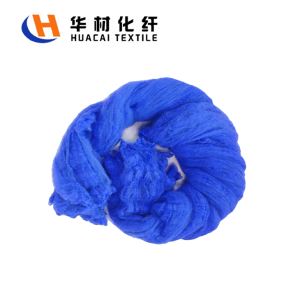
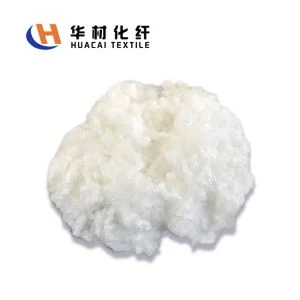
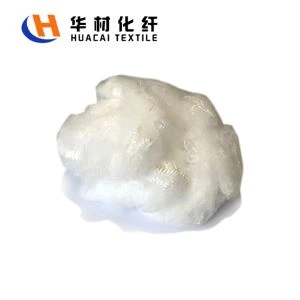
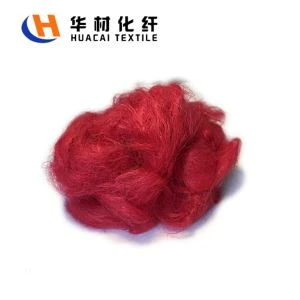
1. ES fiber is a socially ideal hot-bonding fiber, which can be mainly used for non-woven fabric hot-bonding processing. When the carded fiber web is thermally bonded through a hot-rolled or hot-air through-type structure, the low-melting point components are formed and melt-bonded at the intersection points of different fibers, and after cooling, the fibers at the non-intersection points still maintain themselves. This is a form of "point bonding" rather than "area bonding", so the company's product design has the characteristics of bulkiness, softness, high strength, oil absorption, and blood absorption. In recent years, the reason why the effective application technology of the thermal bonding method has been developing rapidly and economically, and the full realization depends on our research on new synthetic chemical fiber composite materials.
2. ES fibers are mixed with PP fibers for acupuncture or thermal bonding to cross-link and bond ES fibers to each other. This method has no adhesive and no substrate cloth.
3. After mixing ES fiber with natural fiber, man-made fiber and pulp, the strength of nonwoven fabric can be greatly improved through the processing technology of wet nonwoven fabric.
4. ES fibers can also be applied in the hydroentanglement process, in which the fiber web is entangled by the hydroentanglement process, and when dry, the crimping of the fibers causes them to be twisted instead of fused together to form a nonwoven with stretchable properties fabric.
5. ES fiber has a wide range of uses, and its wide application field is the covering material of sanitary products. ES fiber is soft, low-temperature processable, non-toxic, non-irritating, and light in weight. It is an ideal material for manufacturing sanitary products such as feminine sanitary napkins and diapers. A common feature of the three markets of the United States, Western Europe and Japan is that hygiene nonwovens are used in all areas of nonwovens.
In Japan, due to their lack of emphasis on quality, the ratio of composite fibers that can be used is very high, and the amount of ES fibers used in sanitary tissue materials accounts for 70% of the total. With the further reform and opening up of our country and the improvement of the living environment of Renmin University, the grade of corporate hygiene service products has gradually been improved. The use of nonwoven fabrics with a high proportion of ES fibers is an inevitable trend for the development of the market economy in the future.
6. ES fiber can also be used in carpets, car wall materials and car cushion materials, cotton tires, health care mattresses, filter materials, insulation materials, gardening materials, hard fiberboards, adsorption materials, packaging materials, etc.
https://www.huacaifiber.com/